
Royal Oak Resident Lookup Records
The best Royal Oak resident lookup starts with the record closest to your question. Property questions lead to the ownership rolls. The City of Royal Oak BS&A property search gives owner-name, parcel, and situs-address leads. Oakland County's deed index tracks recorded parties and dates. A court result shows whether a public case connects the name. A vital record confirms an event, under access rules. Voter tools add facts, limited by public-field rules. Every source has its own purpose, and its own reasons a result may be absent.
| Record trail | What it can confirm | Royal Oak route | Access limit |
|---|---|---|---|
| Assessor parcel record | Recorded owner, situs, parcel, assessment lead | Royal Oak BS&A | Detailed card content may be gated; owner is not proof of occupancy |
| Recorded deed index | Instrument parties, date, and legal-description trail | Oakland Super Index | Index is free; images are charged; older records use tract resources |
| Public court index | Public case link and docket lead | 44th District Court, MiCOURT, Court Explorer | Public categories and participating courts vary |
| Vital event record | Birth, death, marriage, or divorce event | Oakland County Clerk or MDHHS | Eligibility and copy rules vary by event |
| Voter record | Allowed registration, status, and history information | Michigan Voter Information or scoped QVF request | Protected fields are withheld |
Start with a location or time period when one is known. A situs address marks where the parcel sits. A mailing address only shows where tax mail goes. Neither one proves who lives there, and a court party name is likewise just a lead, not proof of identity, fault, or current residence.
Searching Royal Oak Court Names
The 44th District Court lookup covers Royal Oak and Berkley. Names follow a strict format. Enter them as Last Name First Name, with one space and no comma. A middle initial can separate two parties. Wildcards like Smi* help when a spelling is uncertain. A docket or case number opens the docket sheet, the case's chronological list of filed events, so record the case number, party role, and dates before deciding a result belongs to the person.
| Party name | Enter Last Name First Name, with no comma and one space. Add a middle initial when needed. |
|---|---|
| Organization name | Use the organization's name and follow the court's matching guidance. |
| Wildcard | Use a permitted form such as Smi* to broaden a spelling search. |
| Docket or case number | Search the court format when known to open the docket sheet. |
| Warrant status | Not available online. The court directs warrant questions to its published phone or authorized in-person process. |
For name and docket routes in one place, follow the 44th District Court case lookup instructions.
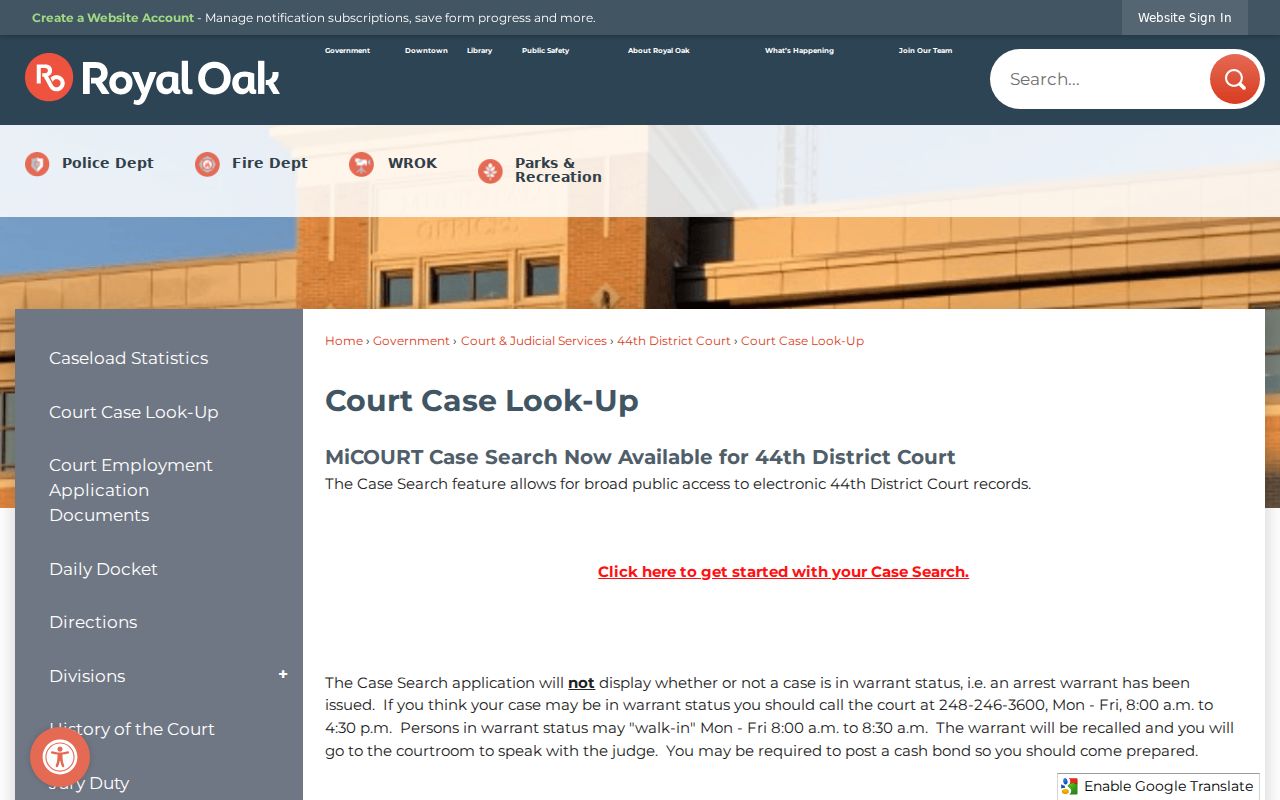
Non-public cases are walled off from online, phone, and mail requests. Court staff cannot even acknowledge them. Only an authorized in-person process reaches those files. A zero online result, then, is never proof of a clean record, and warrant questions should go through the court's published contact route rather than a web search.
Verify a Royal Oak Resident
A person match needs two independent sources. The aim is not a broad profile. You are testing whether one dated record belongs to the same person. Common names need more support than rare ones. Compare spelling, middle initial, date, location, address type, party role, and how current the record is. A former address or a mailing address must be labeled as such, never quietly treated as a present home.
- Start with the Royal Oak BS&A name or property search if a parcel or owner lead is relevant. Record the spelling, parcel, situs, and any separate mailing field without treating either address as a resident list.
- Run the 44th District Court party search using the required Last Name First Name format. Try a middle initial or permitted wildcard only when the first search does not distinguish similar names.
- Compare a public case's party role and filing dates against a deed, vital-event index, or other independent source. A match in two places is stronger than a name alone, but it can still require custodian confirmation.
- For an event record, request only through the proper Oakland County or state channel. Use the result to confirm the event, not to assume a current address or disclose protected data.
- Docket
- The court's event-by-event case list. It can name filings and dates, but a docket is not the entire file and sealed material will not be public.
- Index versus image
- An index identifies a record and its basic fields. An image is the document itself and may have a separate fee or access limit.
- Certified copy
- A copy issued or authenticated by the official custodian for uses that require certification. It is different from a search result or an informational verification.
Note: Log the source and search date for every match, since portal results can change and another Royal Oak party may share the same name.
Royal Oak Vital and Voter Leads
Vital records confirm events, not a citywide current-resident list. Oakland County and the Michigan Department of Health and Human Services handle different copies and eligibility rules. Michigan birth access is restricted during the closed period. The archival release has two published markers. Current MDHHS guidance treats birth records older than 100 years as public, while MCL 333.2885 carries archival-release language pointing to 110 years. Ask the issuing office before ordering. Death and marriage copies are generally requestable for a fee, subject to exceptions. Divorce records reach back to 1897 through the state route, and the court file itself follows separate rules.
Michigan's Voter Information resources point an individual voter to registration, polling, and ballot details. A scoped Qualified Voter File request is a separate route. Its form allows defined geography and history choices. It is not an unrestricted street roster. Allowed fields can include name, residential or mailing address where available, year of birth, registration date, status, voter ID, and requested voter history.
| Birth record | Restricted by eligibility during the closed period; use the current custodian rule for a copy request. |
|---|---|
| Death or marriage record | Event evidence that is generally requestable for a fee, but not proof of residence on the event date. |
| QVF protected data | Driver-license/state-ID number, month and day of birth, phone, email, digitized signature, declined-registration data, and other protected fields are withheld. |
| Royal Oak Clerk | Maintains local election and registration work; municipal records can also have exemptions and scoped access rules. |
A voter registration can be stale. It can be protected, too. It can also tie a mailing address to a residential one that differs from the assessor situs, and it never lists every adult at an address, so use it only for the permitted, dated question it answers.
Royal Oak Resident Lookup Privacy
Michigan's public-record boundaries work record by record. The state has no comprehensive consumer data-broker deletion or universal-opt-out law. Other limits still bind. FOIA exemptions, vital-record rules, voter-file limits, court sealing, and federal driver-record restrictions all apply. Corrections go to the custodian. That means the assessor, Clerk, court, Secretary of State, MDHHS, or registry, depending on which one holds the record. A Michigan FOIA request seeks existing records only. No office must build a custom resident list or release exempt information.
Michigan's Safe at Home program shields eligible participants. It covers people facing domestic violence, sexual assault, stalking, human trafficking, or risk of physical harm, with a substitute address, mail forwarding, and related protections. No real address is searchable for them. The program's application fields stay sensitive administrative information, not public lookup material, so never try to defeat a protected address by combining results from other records.
Lawful use. Use a Royal Oak resident lookup for a narrow, lawful personal research question. Public availability does not permit stalking, harassment, intimidation, or publishing confidential details.
Michigan law takes repeat harassment seriously. Under the stalking statute, MCL 750.411h, two or more acts of harassment or unconsented contact form a course of conduct. That course of conduct can be charged as stalking. A listing in a resident lookup is never an invitation to show up at someone's door, call, or pass along sensitive details about them. Keep dates of birth, phone numbers, Social Security numbers, confidential addresses, and protected material out of anything you write or share.
Royal Oak Court and Registry Limits
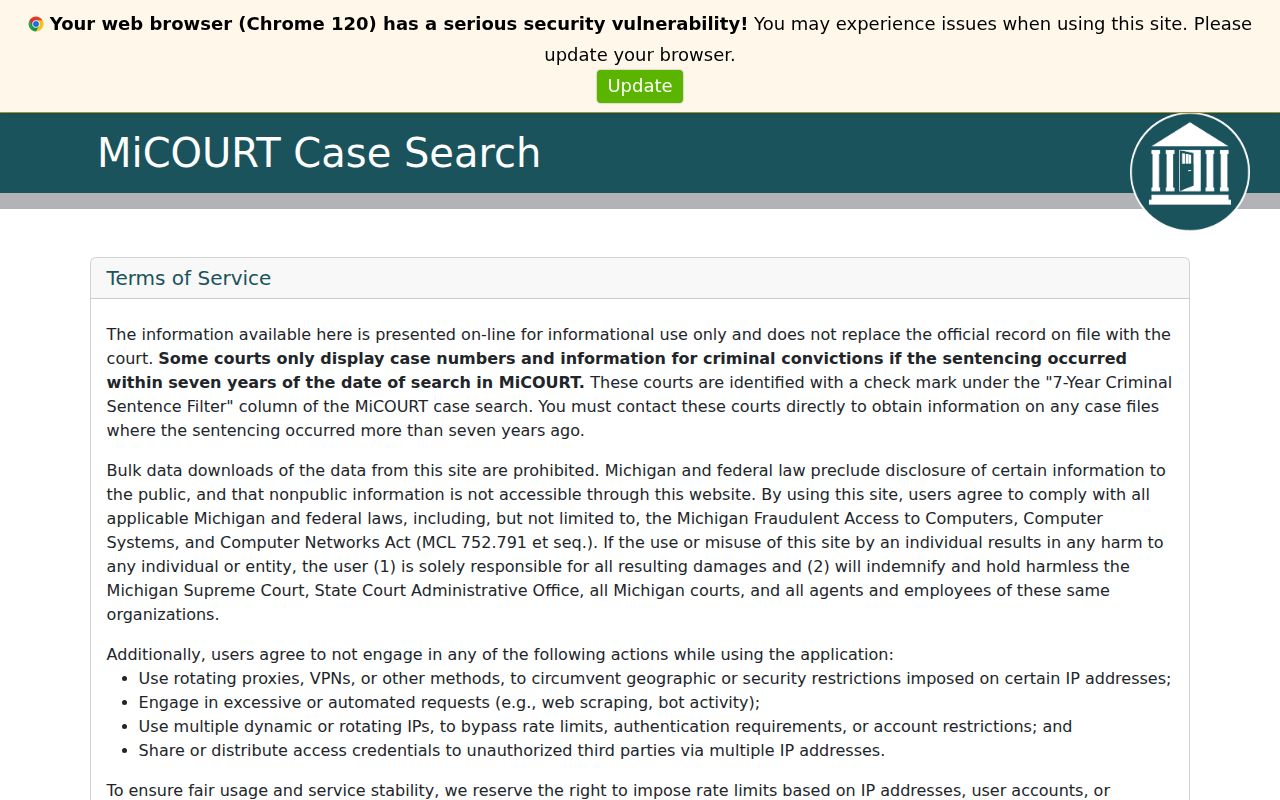
Michigan's MiCOURT search serves as a useful Royal Oak resident lookup lead. But its reach has firm public-record limits. It is an informational statewide case search rather than an official court record. Court participation varies, and so does what each court displays. The terms note a real constraint. Some courts show only criminal convictions within seven years of sentencing. Non-public categories stay unavailable everywhere. A case result in this city directory context is a pointer back to the originating court. It is not a finding about anyone's full history, current address, or character. Verify anything that matters with the court itself. MiCOURT opens the door; the clerk closes the question.
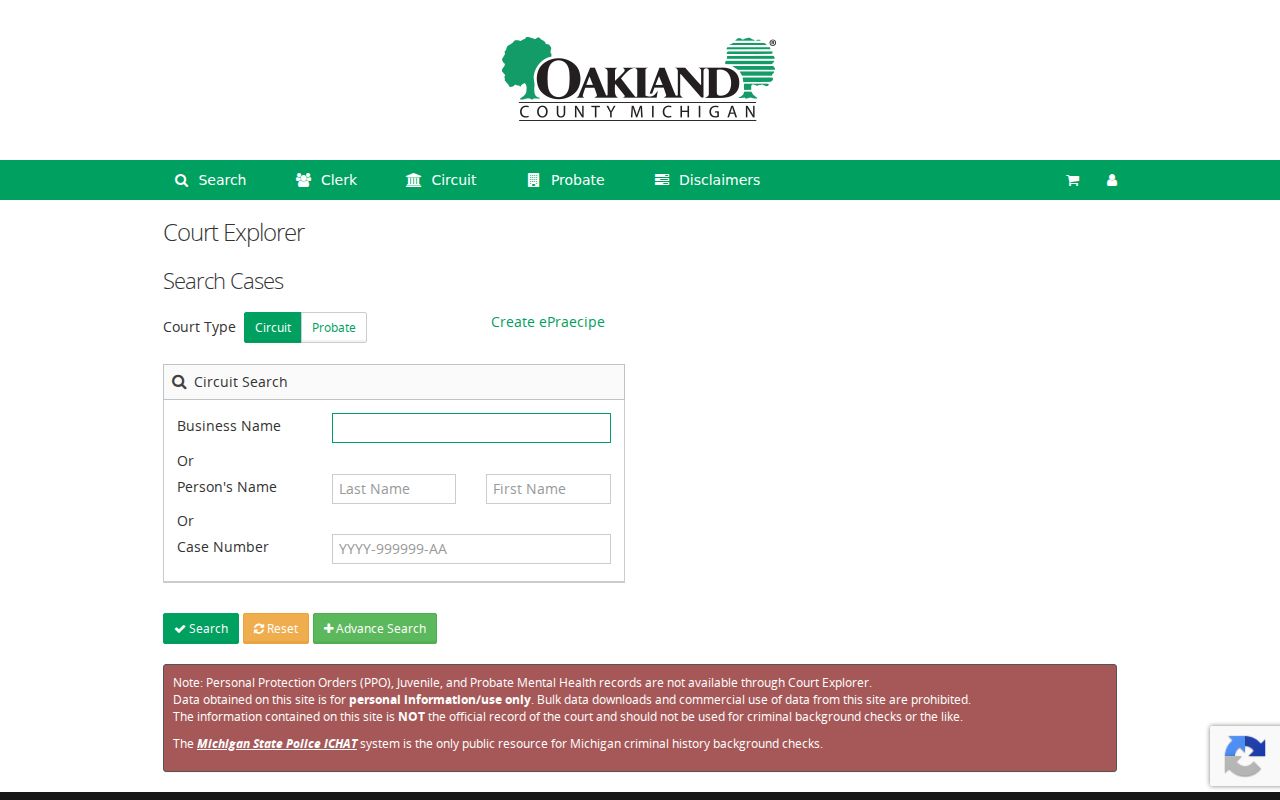
Oakland Court Explorer supplies the court-filter context for a Royal Oak resident lookup. Its Circuit search accepts Business Name or Person Last Name. It also takes First Name and a case number in YYYY-999999-AA form. Party type, case-year, and case-type filters narrow results further. The Probate name route hands off to MiCOURT. Probate Online Services, by contrast, supports name searches for files. It also handles case-number requests for document copies. The Explorer draws exclusions too. PPO, juvenile, and probate mental-health matters do not appear. Bulk or commercial use is barred. Like any index in a residents directory, it is not the official record.
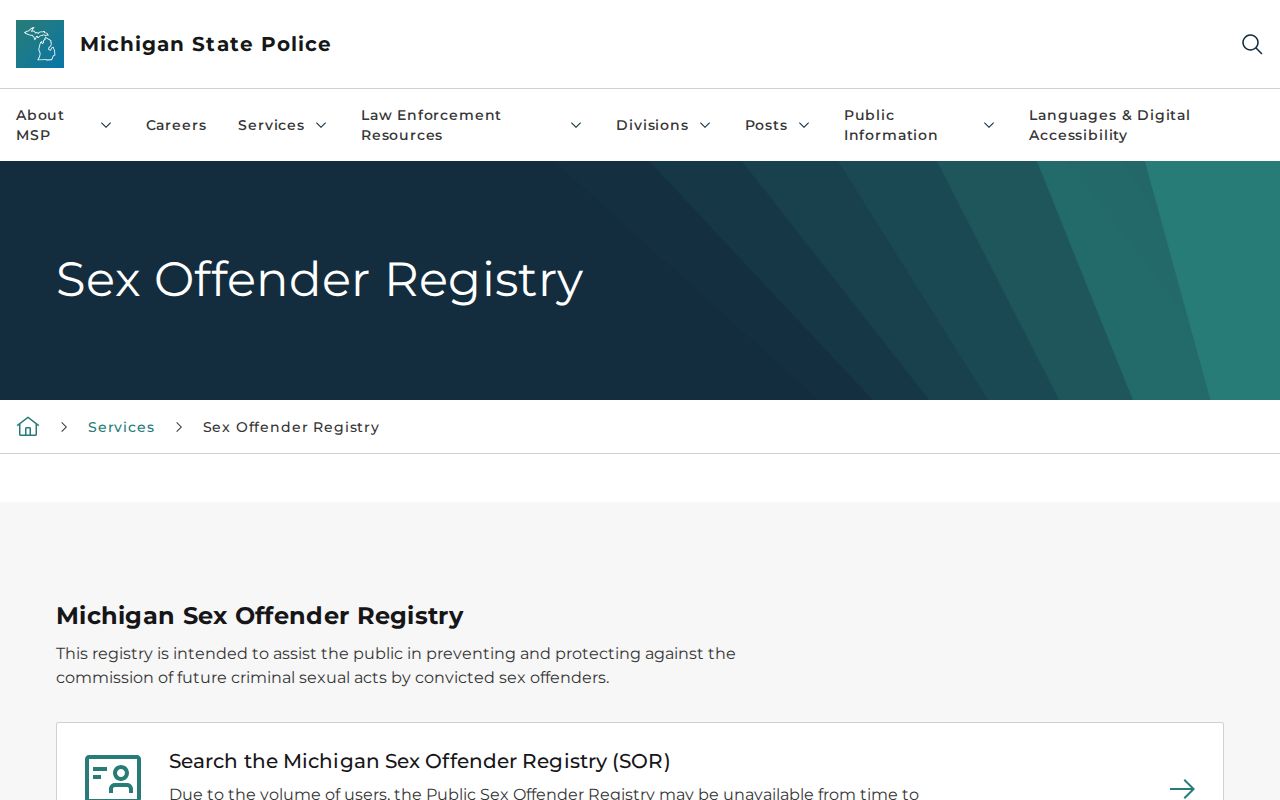
The Michigan State Police registry search answers a narrow statutory purpose. It sits within a Royal Oak resident lookup. It is not a general resident directory or street directory. For published registrants it offers name, registration-number, MDOC-number, address, geography, neighborhood-radius, and status modes. Victim information stays out of public view. There is no full download of the registry. A result here is not proof of a person's entire history or current household. Treat it as one statutory record among many. Read it with that limit in mind. Other property rolls, voter rolls, and city directory sources cover the rest of the picture.
Note: For a public case file or certified record, follow the originating court or custodian's published process rather than relying on an index screen.